ProvaDent Ingredients: Full Profile & Evidence Review
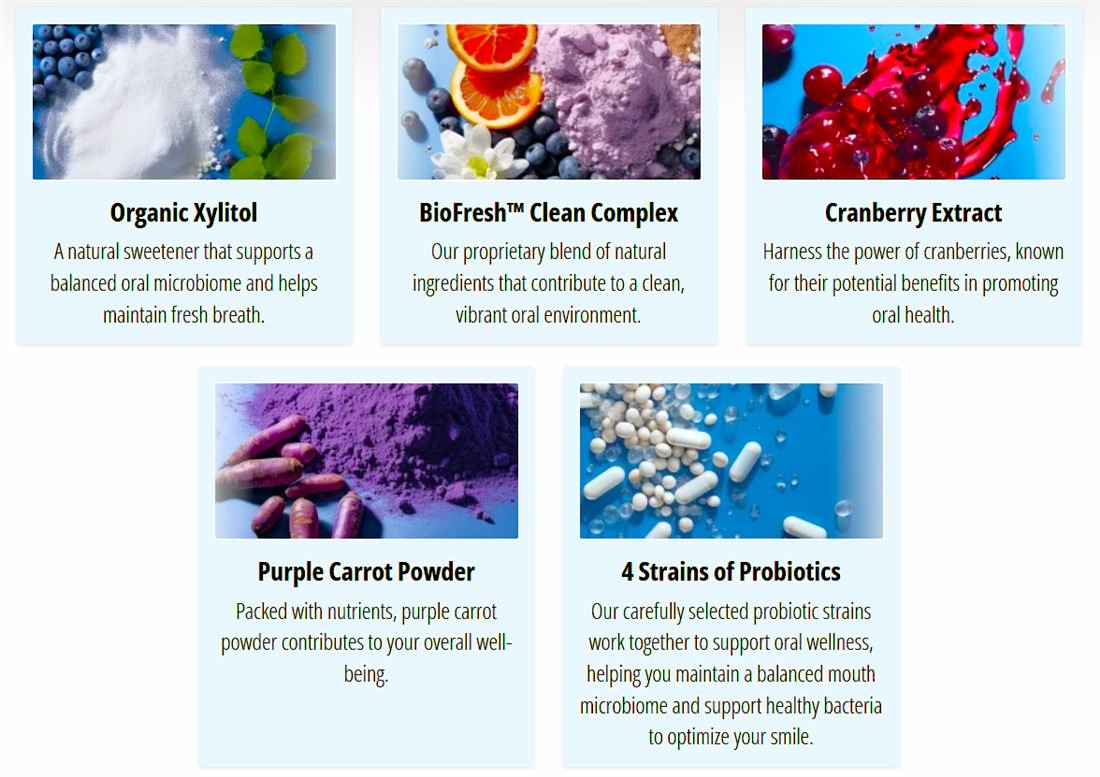
Organic Xylitol
Mixed / inconclusive clinical evidenceWhat it is: Xylitol is a naturally occurring sugar alcohol, often derived from corn or birch, that tastes sweet but is not readily fermented by oral bacteria into cavity-causing acid the way sugar is.
Why it's likely included: As a sweetener that doesn't feed acid-producing bacteria, it fits an "oral-friendly" formula better than sugar or many artificial sweeteners.
What research shows: A 2024 systematic review of nine clinical trials (1,513 participants total) concluded the caries-preventive effect of xylitol "cannot be confirmed," citing wide variability in dose and study design, and noting many trials used doses below the commonly recommended 6g/day threshold.[4] A separate 2015 Cochrane review of xylitol-containing products reached a similar inconclusive verdict, citing a lack of high-quality trials.[10]
What it doesn't establish: These reviews studied xylitol gum and lozenges at specified doses, not a tablet formulation combined with other ingredients — and the evidence doesn't confirm a dental-health benefit even for xylitol alone at typical doses. See our dedicated xylitol and oral health page.
Safety: Xylitol is safe for most people in food/supplement amounts but is well documented as toxic to dogs — keep any xylitol-containing product away from pets.
BioFresh™ Clean Complex
Undisclosed proprietary blendWhat it is: Described by Adem Naturals only as "our proprietary blend of natural ingredients that contribute to a clean, vibrant oral environment."
What we could verify: Nothing beyond that description. The specific plant extracts, compounds, or amounts making up this blend are not disclosed in the product materials available to us.
What this means for you: Because we don't know what's actually in it, we cannot responsibly attach any research citation to this ingredient — doing so would risk misrepresenting evidence about a different substance as if it applied here. If a full ingredient list with amounts becomes available (e.g. printed on the supplement facts panel), it would let us evaluate this component properly; we recommend checking the physical label on arrival.
Cranberry Extract
Laboratory / mechanistic evidenceWhat it is: An extract of cranberry (Vaccinium macrocarpon), most likely standardized for proanthocyanidins (PACs), the compound class most studied in cranberry research.
Why it's likely included: Cranberry PACs are one of the more-researched "functional" oral-health ingredients outside of fluoride and standard antimicrobials.
What research shows: In laboratory (in-vitro) studies, A-type cranberry proanthocyanidins reduced adhesion and biofilm formation of Candida albicans on oral epithelial cells and denture-like acrylic surfaces, and reduced inflammatory cytokine secretion (IL-6, IL-8) from those cells.[5] A separate in-vitro study found cranberry polyphenols inhibited biofilm formation and acid production by Streptococcus mutans.[6] One animal study (rats) found cranberry proanthocyanidin extract reduced caries development compared to a no-treatment control, though a fluoride positive-control group performed better still.[6b]
What it doesn't establish: These are lab-dish (in-vitro) and rodent findings — not human clinical trials, and not a test of a tablet taken orally. The in-vitro study authors themselves note that further trials would be needed to confirm effectiveness in vivo in humans.[5] We found no published human clinical trial of cranberry extract in tablet form for oral health outcomes.
Purple Carrot Powder
General nutrition evidence only — no oral-health research foundWhat it is: A powder made from purple-pigmented carrots (Daucus carota), which owe their color to anthocyanins, a class of antioxidant polyphenols.
What research shows: Published research on purple carrot anthocyanins focuses on general antioxidant activity, bioavailability, and metabolic markers (lipid profile, gut microbial activity) — not oral health specifically.[7]
What it doesn't establish: We found no published research evaluating purple carrot powder, or its anthocyanins, for any oral-health outcome — gum health, plaque, cavities, or breath. Its inclusion appears to be a general-nutrition addition rather than a targeted oral-health ingredient, and marketing language should be read accordingly.
4 Probiotic Strains
Reviewed at the category level, not strain-specificWhat it is: Marketing materials describe "four carefully selected probiotic strains" intended to support a balanced oral microbiome. Strain names and CFU (colony-forming-unit) counts are not disclosed in the materials we reviewed.
What research shows: A 2017 systematic review of 15 studies on oral probiotics found they can reduce counts of Streptococcus mutans (a cavity-associated bacterium) during use, and some studies showed improvements in gum bleeding and probing depth — but with no significant reduction in overall pathogenic bacterial counts and no long-term data confirming actual cavity or gum-disease prevention.[8] A 2024 oral microbiome review notes strains like Streptococcus salivarius and Lactobacillus reuteri specifically have research support for combating pathogenic bacteria and reducing bad breath.[3]
What it doesn't establish: The 2017 review explicitly stresses that probiotic effects are strain-specific — research on one strain doesn't transfer to another. Since ProvaDent doesn't disclose which strains it uses, we cannot confirm whether they match the strains actually studied in the literature above.
The one rule that applies to every ingredient above
Evidence about an individual ingredient — however well-studied — is not the same as evidence that the finished ProvaDent tablet, at its actual (undisclosed) doses, produces a measurable effect in the people who take it. Treat every evidence label above as describing the ingredient in isolation, not the product.